




Penang's anti-hopping law is valid: Apex court
The Federal Court has ruled in favour of the validity of Penang’s anti-hopping law.
The seven-person bench chaired by Chief Justice Tengku Maimun Tuan Mat (above) today made the unanimous ruling over the referral question on the legality and constitutionality of Section 14A of the Penang state constitution.
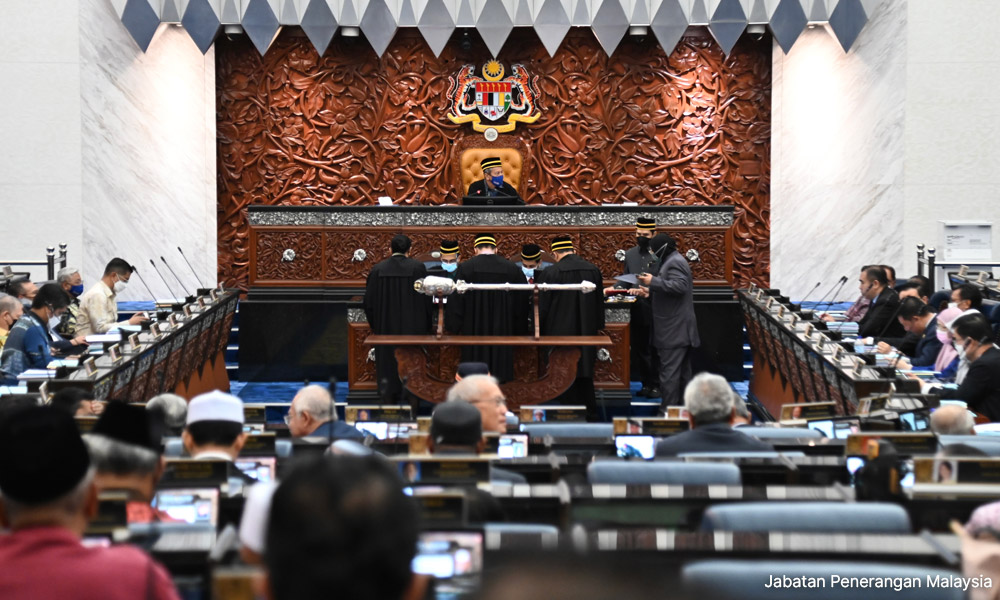
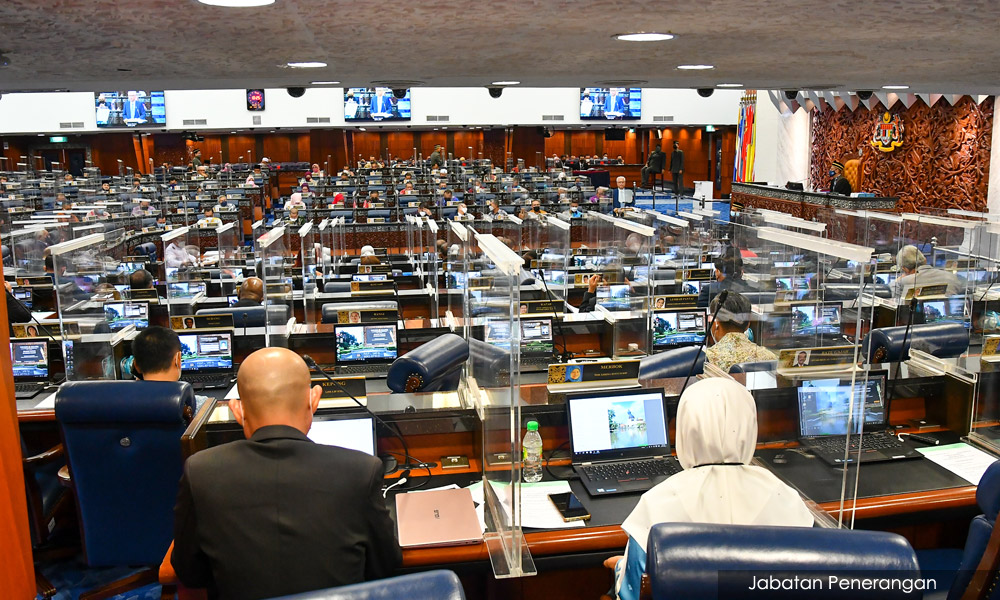
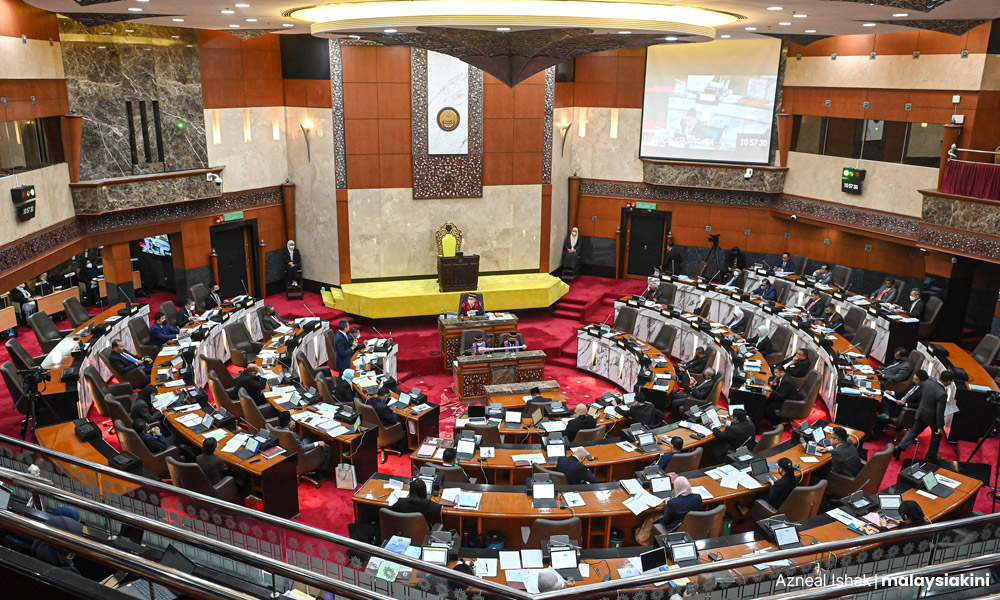
On July 28, Parliament’s Dewan Rakyat successfully passed the federal-level anti-hopping bill with no objections from the 209 lawmakers present, with 11 absentees.
Today’s apex court matter is linked to...
The Federal Court has ruled in favour of the validity of Penang’s anti-hopping law.
The seven-person bench chaired by Chief Justice Tengku Maimun Tuan Mat (above) today made the unanimous ruling over the referral question on the legality and constitutionality of Section 14A of the Penang state constitution.
On July 28, the Dewan Rakyat successfully passed the federal-level anti-hopping bill with no objections from the 209 lawmakers present, with 11 absentees.
The apex court matter is linked to the main legal challenge by four state assemblypersons over the validity of article 14A, which states that an assemblyperson - who initially won an election as a candidate of a political party - must vacate the seat if he or she is expelled or leaves the party.
The three originating motions - by Zulkifli Ibrahim (Sungai Acheh), Afif Bahardin (Seberang Jaya), Khaliq Mehtab Mohd Ishaq (Bertam), and Zolkifly Md Lazim (Telok Bahang) - are pending before the High Court in Georgetown, Penang.
In reading out the unanimous decision this afternoon, Maimun said that Article 14A is neither void nor inconsistent with Article 10(1)(c) of the Federal Constitution.
Article 10(1)(c) deals with the fundamental right to form associations, such as in political parties.
The chief judge pointed out that the right to join or leave a political party is distinct from the rules that a state assemblyperson is bound to upon being elected.
She said that a state legislature has the right to enact its own laws that govern the conduct of an elected assemblyperson in the event that they change political parties.
“Article 10 does not deal with the right to remain as a state assembly member.
“In our judgment, an elected (state) representative’s ability to change or have changed his membership of a political party, for whatever reason, does not take on the character of the citizen’s personal right to form associations as envisioned in Article 10(1)(c) of the Federal Constitution.
“It is instead, part and parcel of the proper functioning of parliamentary democracy and as such, can be validly restricted and regulated by laws passed, in this case, by the state legislature with the view to regulating the terms for qualification on membership in the first respondent (Penang state legislature),” Maimun ruled.
She also noted that the recent Dewan Rakyat passing of the anti-hopping bill also made exceptions in situations where it is not party-hopping if a member of Parliament was sacked from the political party on which they contested for election.
Maimun was referring to the exception contained in the anti-hopping bill passed by the Dewan Rakyat, whereby a party member who is sacked by the party, goes through the due process and later joins another party.
“Our view is that once an elected representative has succeeded in an electoral contest on the ticket (such as under a political party) that he sought, he has exercised his right of association on that ticket.
“Once he is in the house or the state legislature, the nature of his association takes on a different character in that it is no longer his personal right to associate but now governed by the ticket he stands on upon having been given the mandate by the electorate entrusted to him that position.
“We hereby direct the High Court to continue with and dispense of proceedings in accordance with (today’s) Federal Court decision,” she ruled.

Precedent overturned
Maimun added that today’s decision overturned the precedent set by the then Supreme Court in the 1992 case of Dewan Undangan Negeri Kelantan versus Nordin Salleh.
In the case referred to, the Supreme Court had concluded that an amendment to the Kelantan constitution, which prohibited party-hopping, was inconsistent with Article 10(1)(c) of the Federal Constitution, which provides for freedom of association.
Other members of the apex bench were P Nallini, Vernon Ong Lam Kiat, Mary Lim Thiam Suan, Harmindar Singh Dhaliwal, Rhodzariah Bujang, and Mohamad Zabidin Mohd Diah.
The Penang state assembly and its speaker were represented by a legal team led by lawyer Malik Imtiaz Sarwar.
The four assemblypersons were represented by counsel DP Naban among other lawyers.
It was reported that the Penang state assembly was slated to table the anti-party hopping enactment bill in November.
On April 12 this year, Penang High Court judicial commissioner Azizan Md Arshad allowed an application by the Penang state assembly and its speaker to refer questions to the Federal Court to decide on the constitutionality of the state’s anti-hopping enactment.
Following today’s Federal Court ruling, the High Court will rely on the verdict when deliberating on the four assemblypersons’ main legal challenge over the legality of Penang’s anti-hopping law.
Article 14A also states that a state assemblyperson shall vacate his seat if they were elected without being a member of a political party but later joins a party.
The tabling of the Penang state legislature’s motions for Zulkifli, Afif, Khaliq Mehtab, and Zolkifly to vacate their seats has been put on hold pending disposal of their legal action.
Following the Sheraton Move in early 2020 that toppled the Harapan federal government, Zulkifli and Afif were sacked from PKR, while Khaliq and Zolkifly remained members of Bersatu.
Later that year, the four of them filed three separate legal challenges against a motion introduced by the state speaker to vacate their seats and to hold by-elections.



Are you sure you want to delete this comment?
This action cannot be undone.